Would you like to switch to the accessible version of this site?

Go to accessible site Close modal window

Don't need the accessible version of this site?

Hide the accessibility button Close modal window
Accessibility View Close toolbar
Warner Center Pet Clinic

818-710-8528

Open mobile navigation
  • Home
  • Contact Us!
  • News
  • New Patient Center
    • Online Forms
    • What to Expect
    • Veterinary Resources
    • Payment Options
  • Medical Services
  • Meet Our Team
  • Reproductive Services
  • Canine Semen Services
  • Resources
  • Fun Videos
  • Community Content
    • Pet Health
      • Chronic Conditions
      • Digestive and Oral Health
      • Diseases and Viruses
      • Pests and Parasites
      • Orthopedics
    • Today's Veterinarian
    • Choosing Your Pet
      • Finding Your Pet
      • Cats
      • Dogs
      • Exotics
        • Amphibians
        • Birds
        • Reptiles
          • Lizards
          • Turtles
      • Small Mammals
        • Ferrets
        • Rabbits
        • Domesticated Animals
          • Prairie Dogs
        • Pocket Pets
          • Chinchillas
          • Guinea Pigs
          • Hamsters
          • Hedgehogs
          • Rats
      • Livestock
        • Cows
        • Donkeys, Horses & Mules
        • Goats
        • Pigs
        • Poultry
        • Sheep
    • Living With Your Pet
      • Bringing Your Pet Home
      • Children and Pets
      • Providing Care
      • Travel
      • Saying Goodbye
    • Newsletter Library
      • Cats
      • Tips for Pet Owners
      • Behavior & Training
      • Fleas & Parasites
      • Keeping Pets Healthy
      • Recognizing Illness
      • Nutrition & Food
      • Pet Dangers
      • Seasonal Topics
      • Visiting the Vet
      • Equine
      • Newsletter Archive
        • Fun with Pets
        • Unbelievable Pets
    • Video Newsroom
      • Health Topics
      • Technology and Science
      • Other Interests
    • Newsletter Library
    • Client Survey
    • Pets4Kids
  • Home >
  • Articles >
  • Newsletter Library >
  • How to Tell When Your Cat Is Sick

How to Tell When Your Cat Is Sick

  • Created in Newsletter Library

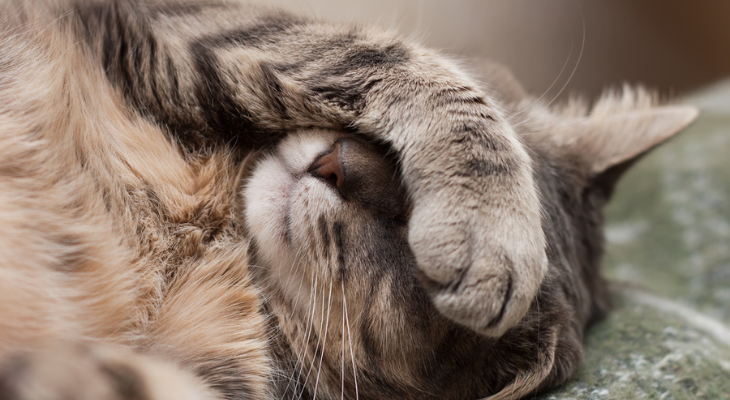
Sick cat hides behind paw

How to Tell When Your Cat Is Sick

Can you recognize the signs that may mean your furry friend isn't feeling well? Cats have an impressive ability to hide their illnesses, even they're very sick. Unfortunately, that may mean delays in getting much-needed veterinary care if you're unfamiliar with common illness signs.

Why Cats Don't Always Seem Sick

In the wild, sick, weak animals are much more likely to be hunted and killed by stronger predators. Although your cat enjoys a comfortable existence in your home, it still retains the instincts that kept its ancestors alive. Your pet could be extremely sick, yet not show obvious signs of illness.

13 Signs That Could Mean Your Pet Is Sick

You might notice any of these signs or behaviors if you're cat is ill:

  • Hiding. It's much easier to escape from predators if they can't find you. If your pet is spending more time than unusual hanging out under the bed, in a closet, or in another out-of-the-way place, it may be sick or in pain.
  • Thirst. Have you been refilling your cat's water bowl more frequently lately? Several diseases and conditions, including diabetes and kidney or thyroid disease, increase your pet's thirst.
  • Change in Litter Box Habits. Your cat might avoid the litter box if it has kidney stones, a urinary tract infection, feline interstitial cystitis, kidney stones, or a life-threatening urinary tract blockage. Some urinary tract conditions could also make it difficult to reach the litter box in time. Older cats may find it difficult to use a litter box with a high rim due to joint pain or arthritis or might forget where the litter box is due to dementia.
  • Loss of Appetite. Just like people, cats may lose interest in food when they're sick. In some cases, cats may feel fine, but may avoid eating due to tooth pain.
  • Vomiting or Diarrhea. Frequent vomiting or diarrhea warrants a trip to the veterinarian's office. Both can be caused by eating a toxic substance, a viral or bacterial infection, intestinal parasites, inflammatory bowel disease, a cancerous or non-cancerous growth, kidney disease, diabetes, thyroid disease, or many other diseases or conditions. If your cat doesn't receive prompt treatment, it could become dangerously dehydrated.
  • Grooming Issues. Sick cats don't feel well enough to keep up with grooming. Their fur may soon look greasy or dull and may come off in clumps. Of course, too much grooming is also a problem and could mean that your cat has fleas or a skin allergy.
  • Weight Loss. Thanks to their fur, it's not always easy to tell if a cat has lost weight. If you can easily feel or see each individual rib, your pet may be too thin. Unintended weight loss in cats could be due to kidney disease, diabetes, cancer, parasites, thyroid disease, dental issues, depression, or anxiety.
  • Lack of Energy. Has your normally energetic cat stopped zooming around the house and pouncing on invisible mice? Lack of energy is another sign that your favorite feline might be unwell.
  • Breathing Problems. Breathing problems often require emergency treatment. Take your pet to the veterinarian immediately if it is breathing rapidly, struggling to breathe or panting. Cats that are having trouble breathing may extend their necks in an attempt to get enough air into their lungs.
  • Runny Nose or Eyes. Watery eyes could mean that your cat has a blocked tear duct or an upper respiratory infection. If an upper respiratory problem is the issue, your pet may also have a runny nose and might sneeze and cough.
  • Inability to Move Back Legs. Has your cat suddenly started dragging it's back legs? The most common cause of the problem is a type of blood clot called a saddle thrombus, according to Tufts University Cummings School of Veterinary Medicine. A stroke, tumor, viral or fungal infection, tick bite, spinal inflammation, slipped disc, or a broken pelvis are among the other reasons for back leg paralysis or weakness.
  • Change in Posture. You may be able to tell that your cat is sick just by looking at it. When a cat is sick, it may hunch over, walk stiffly, change the way it holds it tail or tilt its head.
  • Additional Signs. Other signs of illness can include pale gums, bad breath, more frequent meowing, unusual increase in appetite, lumps, dilated or small pupils, drooling, yellowish eyes or seizures.

Concerned about your cat's health? Give us a call to schedule an appointment for your favorite feline.

Sources:

Tufts: Heart Smart: Information of Pets with Heart Disease

Readers Digest: 13 Silent Signs Your “Healthy” Cat Is Actually Sick, 2/8/2022

American Humane: Recognizing & Caring for a Sick Pet, 6/21/2022

  • Pet Health
    • Chronic Conditions
    • Digestive and Oral Health
    • Diseases and Viruses
    • Pests and Parasites
    • Orthopedics
  • Today's Veterinarian
  • Choosing Your Pet
    • Finding Your Pet
    • Cats
    • Dogs
    • Exotics
      • Amphibians
      • Birds
      • Reptiles
        • Lizards
        • Turtles
    • Small Mammals
      • Ferrets
      • Rabbits
      • Domesticated Animals
        • Prairie Dogs
      • Pocket Pets
        • Chinchillas
        • Guinea Pigs
        • Hamsters
        • Hedgehogs
        • Rats
    • Livestock
      • Cows
      • Donkeys, Horses & Mules
      • Goats
      • Pigs
      • Poultry
      • Sheep
  • Living With Your Pet
    • Bringing Your Pet Home
    • Children and Pets
    • Providing Care
    • Travel
    • Saying Goodbye
  • Newsletter Library
    • Cats
    • Tips for Pet Owners
    • Behavior & Training
    • Fleas & Parasites
    • Keeping Pets Healthy
    • Recognizing Illness
    • Nutrition & Food
    • Pet Dangers
    • Seasonal Topics
    • Visiting the Vet
    • Equine
    • Newsletter Archive
      • Fun with Pets
      • Unbelievable Pets
  • Video Newsroom
    • Health Topics
    • Technology and Science
    • Other Interests
  • Newsletter Library
  • Client Survey
  • Pets4Kids
No Health Form settings found. Please configure it.

Featured Links

Click to find out more

  • Online Forms

    Our patient forms are available online so they can be completed in the convenience of your own home or office.
  • Instagram

    Follow Us on Instagram

  • Facebook

    Follow us on Facebook!

Office Hours

Our Regular Schedule

Monday:

9:00 am-4:00 pm

Tuesday:

9:00 am-4:00 pm

Wednesday:

9:00 am-4:00 pm

Thursday:

9:00 am-4:00 pm

Friday:

9:00 am-3:00 pm

Saturday:

9:00 am-12:00 pm

Sunday:

Closed

Location

Find us on the map

Testimonials

Read What Our Clients Say

  • "For every emergency or standard procedure, Warner Center is my vet of choice. Dr. Jackson and the staff have been amazing through the years. They are especially understanding of show dogs and responsible breeders. My only wish is for longer hours but they can only do so much. Thank you Warner Center! :)"
    Shauna S. / Woodland Hills, CA

Featured Articles

Read about interesting topics

  • March Newsletter: How to Keep Your Cat Safe When Outdoors

    Wondering how your cat can safely spend time outdoors? ...

    Read More
  • March Newsletter: How to Choose Safe Blankets for Pets

    Do you know how to pick a safe blanket for your pet? ...

    Read More
  • February Newsletter: How to Reduce Dental Anxiety in Pets

    Does your pet hate toothbrushing? These tips could reduce dental anxiety. ...

    Read More
  • February Newsletter: How to Safely Change Your Cat’s Food

    Buying a new food for your cat? Find out how to switch foods safely. ...

    Read More
  • January Newsletter: Signs Your Pet Needs a Wellness Exam

    Does your pet need a wellness exam? ...

    Read More
  • January Newsletter: How Your Veterinarian Can Help If Your Pet Ingests Something Toxic

    Has your pet eaten something it shouldn't have? Find out how your vet can help. ...

    Read More
  • December Newsletter: Signs Your Pet Needs a Professional Cleaning

    Do you know when your pet needs a professional cleaning? ...

    Read More
  • December Newsletter: Simple Ways to Keep Your Home Flea-Free for Your Pet’s Well-being

    Never want to see another flea again? Try these tips for a flea-free home. ...

    Read More
  • November Newsletter: The Importance of Bloodwork for Your Pet’s Health

    Wondering if your pet really needs bloodwork? Find out the benefits of blood tests for your furry friend. ...

    Read More
  • November Newsletter: Turkey Day Tips for Pet Owners

    Don't forget about your pet when making Turkey Day preparations. ...

    Read More

Newsletter Signup

Sign up for more articles

Error!

    Connect With Us

    • Copyright © 2026 MH Sub I, LLC dba iMatrix.
    • Admin Log In
    • Site Map