Would you like to switch to the accessible version of this site?

Go to accessible site Close modal window

Don't need the accessible version of this site?

Hide the accessibility button Close modal window
Accessibility View Close toolbar
Warner Center Pet Clinic

818-710-8528

Open mobile navigation
  • Home
  • Contact Us!
  • News
  • New Patient Center
    • Online Forms
    • What to Expect
    • Veterinary Resources
    • Payment Options
  • Medical Services
  • Meet Our Team
  • Reproductive Services
  • Canine Semen Services
  • Resources
  • Fun Videos
  • Community Content
    • Pet Health
      • Chronic Conditions
      • Digestive and Oral Health
      • Diseases and Viruses
      • Pests and Parasites
      • Orthopedics
    • Today's Veterinarian
    • Choosing Your Pet
      • Finding Your Pet
      • Cats
      • Dogs
      • Exotics
        • Amphibians
        • Birds
        • Reptiles
          • Lizards
          • Turtles
      • Small Mammals
        • Ferrets
        • Rabbits
        • Domesticated Animals
          • Prairie Dogs
        • Pocket Pets
          • Chinchillas
          • Guinea Pigs
          • Hamsters
          • Hedgehogs
          • Rats
      • Livestock
        • Cows
        • Donkeys, Horses & Mules
        • Goats
        • Pigs
        • Poultry
        • Sheep
    • Living With Your Pet
      • Bringing Your Pet Home
      • Children and Pets
      • Providing Care
      • Travel
      • Saying Goodbye
    • Newsletter Library
      • Cats
      • Tips for Pet Owners
      • Behavior & Training
      • Fleas & Parasites
      • Keeping Pets Healthy
      • Recognizing Illness
      • Nutrition & Food
      • Pet Dangers
      • Seasonal Topics
      • Visiting the Vet
      • Equine
      • Newsletter Archive
        • Fun with Pets
        • Unbelievable Pets
    • Video Newsroom
      • Health Topics
      • Technology and Science
      • Other Interests
    • Newsletter Library
    • Client Survey
    • Pets4Kids
  • Home >
  • Articles >
  • Newsletter Library >
  • First Aid Basics for Pet Owners

First Aid Basics for Pet Owners

  • Created in Newsletter Library

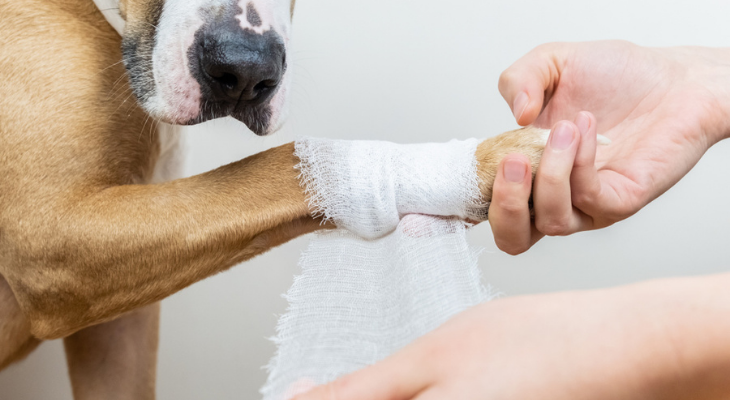
Dog having leg wrapped with gauze

First Aid Tips For Pet Owners During Pet First Aid Awareness Month

Do you know how to help your pet in an emergency? Fortunately, many of the same first aid techniques you use to care for your family's injuries can also help your pets. National Pet First Aid Awareness Month, celebrated every April, is the perfect time to review your first aid knowledge for these common pet injuries:

Wounds

Minor cuts can be treated at home, although deep lacerations, bite wounds, or cuts that won't stop bleeding require an emergency trip to the veterinarian's office. Rinse the wound with warm water to remove debris. If the cut is still bleeding, cover it with a clean cloth or piece of gauze and apply gentle pressure for a few minutes.

Once the bleeding stops, clean the wound with chlorhexidine or povidone-iodine, cover it with a thin layer of antibiotic ointment, and bandage it. You may need to trim your pet's fur in order to clean and bandage the wound.

Heatstroke

Just like people, pets can experience heatstroke on hot, humid days. Signs of heatstroke in pets can include:

  • Panting
  • Drooling
  • Trouble breathing
  • Unusual thirst
  • Fever
  • Glazed eyes
  • Bright red gums
  • Vomiting
  • Fast heart rate
  • Diarrhea
  • Vomiting
  • Confusion
  • Collapse
  • Seizures

After you bring your pet inside, pour cool water all over it or place cool towels on it. The water should be cool and not cold to prevent shock. Offer your pet water, then carry your furry friend to the car and make your way to the veterinary office. Heatstroke is a medical emergency that requires prompt treatment, even if your pet seems to be recovering.

Soft Tissue Injuries

Does your dog seem a little sore after playing at the dog park or a vigorous agility training session? It may have a bruise or strained or sprained muscle. If your pet will tolerate it, place an ice pack or heating pad over the injured area. Limit your companion's activity for a day or two following the injury. If your pet seems to be in pain, limps, or has trouble moving a limb, give the veterinarian a call.

Broken Bones

Although broken bones can't be treated at home, there are a few things you can do to keep your pet comfortable while you get ready for the trip to the vet office. Gently pick up your pet and put it in a pet carrier to prevent unnecessary, painful movement. If your pet is too injured to put in a carrier, make a stretcher from a board, door, boogie board, or another item that won't bend.

Splinting isn't usually necessary unless the limb seems unstable. If that's the case, use non-adhesive tape to gently attach the limb to a stiff, straight object, like a Popsicle stick or rolled-up magazine.

Poisoning

If you think that your pet has eaten something it shouldn't, call your veterinarian or the ASPCA's Animal Poison Control Center at (888) 426-4435 for advice. If the substance is toxic, you'll need to take your pet to the veterinarian immediately. Don't try to make your pet vomit or give it activated charcoal without checking with your veterinarian first. In some cases, these actions can worsen your pet's condition.

Things to Keep in Mind

These tips will help you provide the best care for your sick or injured pet:

  • Protect Yourself. Severe pain can cause your pet to lash out and scratch or bite you. It's a good idea to put a muzzle on your dog or wrap a towel around your cat. Don't wrap the towel too tightly and don't use it if you think your cat has a broken bone.
  • Don't Pull Out Protruding Objects. Does your pet have a piece of glass protruding from its paw or a stick stuck in its side? Pulling out the object could increase bleeding or worsen the injury. Let your veterinarian safely remove the object instead.
  • Keep a First Aid Kit on Hand. Assemble a first aid kit just for pet emergencies. Add gauze, non-adhesive bandages, self-adherent wrap tape, cotton balls, activated charcoal, antibiotic ointment, iodine, scissors, styptic powder, and ice packs to your kit.

Get in touch with our office right away if your pet has an injury. Whether your furry friend is suffering from a cut, heatstroke, a sprain, or broken bone, prompt treatment is essential.

Sources:

American Veterinary Medical Association: Pet First Aid – Basic Procedures

dvm360: The 3-Tiered Approach of Treating Heatstroke in Dogs, 6/29/2018

Purina: Cat First Aid

ASPCA: Animal Poison Control

  • Pet Health
    • Chronic Conditions
    • Digestive and Oral Health
    • Diseases and Viruses
    • Pests and Parasites
    • Orthopedics
  • Today's Veterinarian
  • Choosing Your Pet
    • Finding Your Pet
    • Cats
    • Dogs
    • Exotics
      • Amphibians
      • Birds
      • Reptiles
        • Lizards
        • Turtles
    • Small Mammals
      • Ferrets
      • Rabbits
      • Domesticated Animals
        • Prairie Dogs
      • Pocket Pets
        • Chinchillas
        • Guinea Pigs
        • Hamsters
        • Hedgehogs
        • Rats
    • Livestock
      • Cows
      • Donkeys, Horses & Mules
      • Goats
      • Pigs
      • Poultry
      • Sheep
  • Living With Your Pet
    • Bringing Your Pet Home
    • Children and Pets
    • Providing Care
    • Travel
    • Saying Goodbye
  • Newsletter Library
    • Cats
    • Tips for Pet Owners
    • Behavior & Training
    • Fleas & Parasites
    • Keeping Pets Healthy
    • Recognizing Illness
    • Nutrition & Food
    • Pet Dangers
    • Seasonal Topics
    • Visiting the Vet
    • Equine
    • Newsletter Archive
      • Fun with Pets
      • Unbelievable Pets
  • Video Newsroom
    • Health Topics
    • Technology and Science
    • Other Interests
  • Newsletter Library
  • Client Survey
  • Pets4Kids
No Health Form settings found. Please configure it.

Featured Links

Click to find out more

  • Online Forms

    Our patient forms are available online so they can be completed in the convenience of your own home or office.
  • Instagram

    Follow Us on Instagram

  • Facebook

    Follow us on Facebook!

Office Hours

Our Regular Schedule

Monday:

9:00 am-4:00 pm

Tuesday:

9:00 am-4:00 pm

Wednesday:

9:00 am-4:00 pm

Thursday:

9:00 am-4:00 pm

Friday:

9:00 am-3:00 pm

Saturday:

9:00 am-12:00 pm

Sunday:

Closed

Location

Find us on the map

Testimonials

Read What Our Clients Say

  • "For every emergency or standard procedure, Warner Center is my vet of choice. Dr. Jackson and the staff have been amazing through the years. They are especially understanding of show dogs and responsible breeders. My only wish is for longer hours but they can only do so much. Thank you Warner Center! :)"
    Shauna S. / Woodland Hills, CA

Featured Articles

Read about interesting topics

  • March Newsletter: How to Keep Your Cat Safe When Outdoors

    Wondering how your cat can safely spend time outdoors? ...

    Read More
  • March Newsletter: How to Choose Safe Blankets for Pets

    Do you know how to pick a safe blanket for your pet? ...

    Read More
  • February Newsletter: How to Reduce Dental Anxiety in Pets

    Does your pet hate toothbrushing? These tips could reduce dental anxiety. ...

    Read More
  • February Newsletter: How to Safely Change Your Cat’s Food

    Buying a new food for your cat? Find out how to switch foods safely. ...

    Read More
  • January Newsletter: Signs Your Pet Needs a Wellness Exam

    Does your pet need a wellness exam? ...

    Read More
  • January Newsletter: How Your Veterinarian Can Help If Your Pet Ingests Something Toxic

    Has your pet eaten something it shouldn't have? Find out how your vet can help. ...

    Read More
  • December Newsletter: Signs Your Pet Needs a Professional Cleaning

    Do you know when your pet needs a professional cleaning? ...

    Read More
  • December Newsletter: Simple Ways to Keep Your Home Flea-Free for Your Pet’s Well-being

    Never want to see another flea again? Try these tips for a flea-free home. ...

    Read More
  • November Newsletter: The Importance of Bloodwork for Your Pet’s Health

    Wondering if your pet really needs bloodwork? Find out the benefits of blood tests for your furry friend. ...

    Read More
  • November Newsletter: Turkey Day Tips for Pet Owners

    Don't forget about your pet when making Turkey Day preparations. ...

    Read More

Newsletter Signup

Sign up for more articles

Error!

    Connect With Us

    • Copyright © 2026 MH Sub I, LLC dba iMatrix.
    • Admin Log In
    • Site Map